

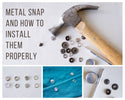
Metal Snaps and Tips to Install Them Properly
, by Holly Hetzner, 8 min reading time
, by Holly Hetzner, 8 min reading time

I absolutely hate buttons. Well, to be truthful I don’t hate buttons. I love them, there is such a great variety. Also, did I mention that they are so INEXPENSIVE! But what I hate is the buttonhole, there I said it. I hate buttonholes. They never turn out the way they are supposed to. I know it’s 100% user error. I have used many different machines from basic machines to ones that cost a small fortune. But it’s inevitable that sooner or later I will have to have a button on a blouse or sweater. But I have a secret to tell you. “I still don’t use buttons, shhh don’t tell anybody”. You might ask, What do you use instead? Metal snaps.
I love metal snaps, they are my secret weapon. They make any outfit look fancy, even though in my opinion they are so much easier than buttons. But there is a learning curve to snaps. There are specific snaps for specific fabric types. When you use the wrong type of snap. You will more than likely get the dreaded snap that has pulled through the fabric and will not come off to save your life, plus a hole that is hard to fix. So let’s figure out which snap is best for your project, and learn some tips I use to install them. So they will stay put for the long haul.
There are dozens of types of snaps under the sun. For this post, I am going to talk about metal snaps.
There are two main types of metal snaps I want to talk about: Lightweight and heavyweight.
Lightweight snaps are used with fabrics such as knits and light woven fabrics, think 100% cotton dresses. How do you know if the snaps are lightweight? Most of the time the package will tell you which weight of fabric it is made for. Another thing I like to look at, do they have teeth or not. Most of the time if they have teeth and do not require “fancy” tools to install them, then they are more then likely lightweight snaps.
There are four parts to a snap. The “Top Snap” and the “Socket” fit together and go on the outer most side of the garment. This is the part of the snap that will be seen. In this example, the top snap is a decorative pearl. Some snaps the top snap is colored, or it can also be open and look exactly like the open pronged ring. The “Stud” and the “Open Pronged Ring” will go together. This part of the snap will not be seen unless it is unsnapped.
Lightweight snaps work by the prongs being bent so they go open up and go into the other piece. This joins the two pieces and the fabric together.

Metal Snaps (there should be four pieces for each snap)
Hammer
Spool of thread

Heavyweight snaps are better suited for denim, bottom-weight fabric, and coat fabric. These snaps tend to be more durable since they will be used more often. Heavyweight snaps generally do not have teeth. They have two sets of eyelets that help join the pieces together. They also require tools to help install them, since you are curling the metal.
Like lightweight snaps, heavyweight snaps consist of four parts. The “Button” and the “Socket” fit together and go on the outer most side of the garment. This is the part of the snap that will be seen. The “Stud” and the “Eyelet” will go together. This part of the snap will not be seen unless it is unsnapped.
Heavyweight Snaps work by the button and eyelet pieces being rolled or curled onto the socket and stud. This is a very strong connection, but it can have a sharp edge. This sharp edge is what causes holes and popped snaps in lighter weight fabric.

Metal Snaps (there should be four pieces for each snap)
Hammer
Setting Tool
Metal Holder
Awl (or a nail)

If you want to try adding some snaps to a shirt, I think the Julianne would look amazing with some pearl snaps. If you want to try your hand at the heavyweight snaps, the Anna skirt would be divine with some metal snaps!
Each snap is a bit different. These tips are based on the knowledge I have of snaps. I hope these tips help you have far fewer holes and popped snaps then I have had in the past. (Which is a lot!)
-- Originally written by Nicole Cook. Archived by Holly Hetzner.